Quantum Computing
Today we are going to explore Quantum computing.

Quantum computing is a type of computing that uses quantum-mechanical phenomena, such as superposition and entanglement, to perform operations on data. Unlike classical computers, which use bits to represent data as either 0 or 1, quantum computers use quantum bits, or qubits, which can represent both 0 and 1 simultaneously. This allows quantum computers to perform certain calculations much faster than classical computers. However, quantum computing is still in its early stages of development and is not yet widely available for practical use.
Superposition and entanglement are two fundamental concepts in quantum computing
Superposition and entanglement are two fundamental concepts in quantum computing that enable faster computations in certain scenarios. Superposition allows qubits to exist in multiple states simultaneously. In classical computing, a bit can be either 0 or 1, but in quantum computing, a qubit can be in a superposition of both 0 and 1 at the same time. This means that a quantum computer can perform multiple calculations in parallel, exponentially increasing its computational power. By manipulating the qubits and applying quantum gates, quantum algorithms can exploit this superposition to perform complex computations more efficiently than classical algorithms.
Entanglement, on the other hand, is a phenomenon where two or more qubits become correlated in such a way that the state of one qubit is dependent on the state of the others, regardless of the distance between them. This correlation allows for the creation of entangled states, where the measurement of one qubit instantly determines the state of the other qubits. This property is particularly useful for quantum communication and quantum teleportation. When it comes to computations, entanglement enables quantum computers to process information in a highly parallel and interconnected manner. It allows for the creation of quantum circuits where the state of one qubit can influence the state of other qubits, leading to complex interactions and computations that are not possible with classical computers. This parallelism and interconnectedness provided by entanglement can significantly speed up certain types of calculations, such as factorization and searching algorithms. It's important to note that while superposition and entanglement offer the potential for faster computations in quantum computing, harnessing their power effectively requires the development of specialized quantum algorithms and error-correcting techniques. Quantum computing is still an active area of research, and there are many challenges to overcome before it becomes a practical and widely accessible technology.
Uses of Quantum Computing
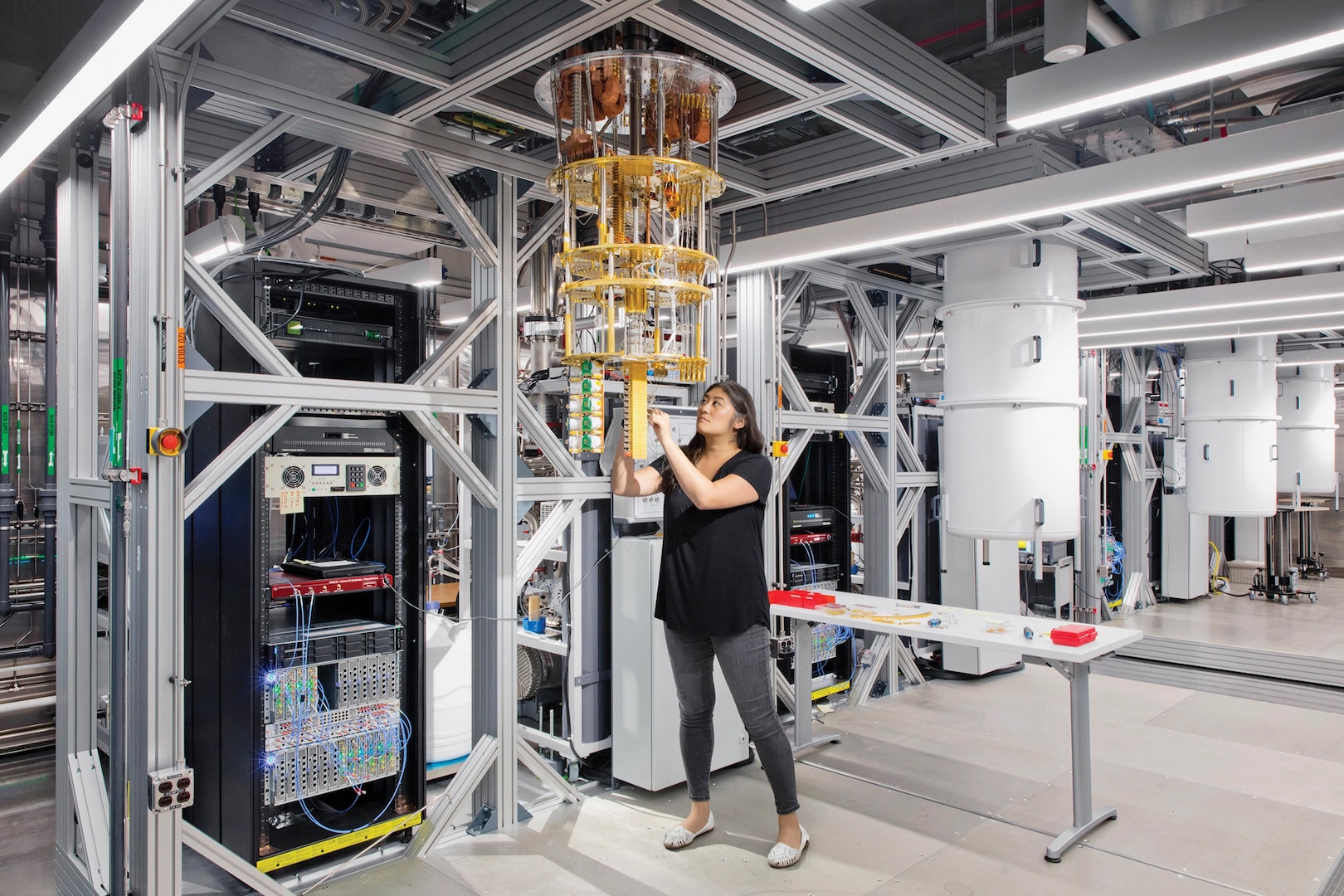
Quantum computing has the potential to revolutionize various fields and solve complex problems that are currently intractable for classical computers. Here are some potential uses of quantum computing:
1. Cryptography: Quantum computers have the ability to break many of the encryption algorithms used in modern cryptography. However, they can also be used to develop quantum-resistant encryption methods, ensuring secure communication in the post-quantum era.
2. Optimization: Quantum computing can be used to solve optimization problems more efficiently. This includes tasks such as route optimization, supply chain management, portfolio optimization, and scheduling optimization, which have applications in logistics, finance, and various industries.
3. Drug Discovery: Quantum computers can simulate and analyze the behavior of molecules and atoms, enabling more accurate modeling of chemical reactions. This can accelerate the process of drug discovery by identifying potential drug candidates and optimizing their properties.
4. Material Science: Quantum simulations can help in designing new materials with desired properties, such as superconductors, catalysts, and advanced materials for energy storage. This can lead to advancements in renewable energy, electronics, and other areas.
5. Machine Learning: Quantum machine learning algorithms can enhance pattern recognition, data analysis, and optimization tasks. Quantum computers can process and analyze large datasets more efficiently, leading to advancements in artificial intelligence and data-driven decision-making.
6. Financial Modeling: Quantum computing can improve financial modeling and risk analysis by efficiently simulating complex financial systems and optimizing investment portfolios. This can aid in making more accurate predictions and informed financial decisions.
7. Quantum Chemistry: Quantum computers can simulate the behavior of molecules and chemical reactions, enabling the discovery of new materials, catalysts, and drugs. This can have significant implications for the pharmaceutical industry and chemical research.
8. Supply Chain Optimization: Quantum computing can optimize supply chain logistics, including inventory management, transportation routing, and demand forecasting. This can lead to cost savings, improved efficiency, and reduced environmental impact.
It's important to note that quantum computing is still in its early stages, and many of these applications are still being explored and developed. The full potential of quantum computing is yet to be realized, and ongoing research and advancements are needed to overcome technical challenges and harness its power effectively.
By

Deepika Singh
Academic writer
infovision.deepika@gmail,com


No comments:
Post a Comment