Micro -Learning an important E-learning trend
Micro learning is quickly becoming a popular trend in the world of e-learning. This method of learning involves breaking down complex information into smaller, more easily digestible chunks. By presenting material in short, focused bursts, micro learning allows students to retain information more effectively and apply it in real-world situations. This approach is especially beneficial for individuals with short attention spans or busy schedules, as they can consume bite-sized pieces of content on-the-go.
One of the key advantages of micro learning is its flexibility. Learners can access short lessons or modules whenever and wherever they choose, using their smartphones or other devices. This convenience makes it easier for students to fit learning into their daily routines, leading to increased engagement and motivation. In addition, micro learning can be tailored to each individual's unique learning preferences and needs, allowing for a more personalized and effective learning experience.
Furthermore, micro learning has been shown to improve retention rates and knowledge transfer. By delivering information in smaller increments, learners are more likely to remember and apply what they have learned. This is because the brain can only process a limited amount of information at a time. By breaking down complex concepts into smaller chunks, micro learning helps to prevent cognitive overload and enhance understanding.
Another benefit of micro learning is that it encourages continuous learning and skill development. Instead of waiting for traditional training sessions or courses, students can engage in short, targeted lessons on a regular basis. This ongoing approach to learning promotes a culture of continuous improvement and innovation within organizations, leading to better outcomes and increased competitiveness.
Micro learning is a valuable trend in e-learning that offers numerous benefits for learners and organizations alike. By providing short, focused lessons that are easily accessible and personalized, micro learning enhances retention and knowledge transfer. It also promotes continuous learning and skill development, leading to increased engagement and motivation among students. As technology continues to advance, the popularity of micro learning is likely to grow, making it an important tool for educators and learners in the digital age.
Micro learning platforms have gained immense popularity in recent years as a convenient and effective way for individuals to acquire new skills and knowledge in bite-sized increments. These platforms offer users the opportunity to learn on-the-go, allowing them to fit learning into their busy schedules. Some of the most popular micro learning platforms include Khan Academy, Coursera, Duolingo, TED-Ed, LinkedIn Learning, and Udemy.

Khan Academy is a non-profit organization that provides a wide range of free online courses on subjects ranging from math and science to history and economics. The platform is especially popular among students looking to supplement their classroom learning or individuals seeking to expand their knowledge on a specific topic. Coursera is another popular micro learning platform that offers courses from top universities and institutions around the world. Users can choose from a variety of courses in subjects such as business, computer science, and health, and earn a certificate upon completion.
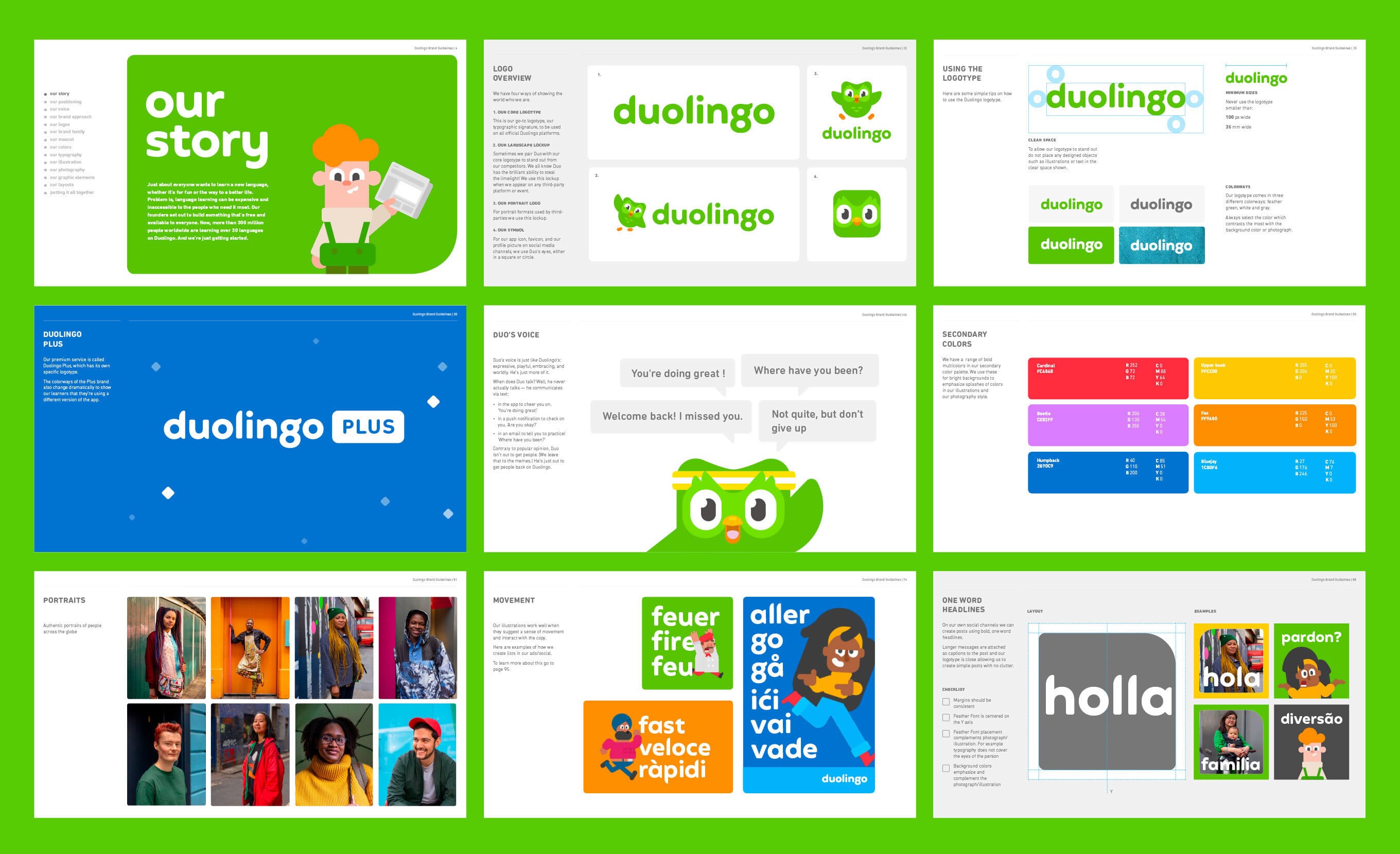
Duolingo is a popular micro learning platform for individuals looking to learn a new language. The platform offers interactive lessons in over 30 languages and uses gamification to engage users and keep them motivated. TED-Ed is another popular platform that offers short, engaging video lessons on a wide range of topics, from science and technology to art and literature. Users can watch these videos on-the-go and expand their knowledge in just a few minutes.

LinkedIn Learning, formerly known as Lynda.com, is a popular micro learning platform for professionals looking to develop new skills and advance their careers. The platform offers courses in business, technology, and creative topics, and allows users to learn at their own pace.

Udemy is another popular platform that offers a wide range of courses on topics such as programming, photography, and marketing. Users can choose from a variety of courses taught by industry experts and learn new skills that can help them advance in their careers.
In conclusion, popular micro learning platforms offer users a convenient and effective way to acquire new skills and knowledge in bite-sized increments. These platforms cater to a wide range of learning preferences and subjects, making it easier for individuals to find courses that suit their needs. Whether you are a student looking to supplement your classroom learning, a professional looking to advance your career, or someone looking to learn a new language, there is a micro learning platform out there for you. So why not take advantage of these platforms and start learning today?

Quantum Computing
Today we are going to explore Quantum computing.

Quantum computing is a type of computing that uses quantum-mechanical phenomena, such as superposition and entanglement, to perform operations on data. Unlike classical computers, which use bits to represent data as either 0 or 1, quantum computers use quantum bits, or qubits, which can represent both 0 and 1 simultaneously. This allows quantum computers to perform certain calculations much faster than classical computers. However, quantum computing is still in its early stages of development and is not yet widely available for practical use.
Superposition and entanglement are two fundamental concepts in quantum computing
Superposition and entanglement are two fundamental concepts in quantum computing that enable faster computations in certain scenarios. Superposition allows qubits to exist in multiple states simultaneously. In classical computing, a bit can be either 0 or 1, but in quantum computing, a qubit can be in a superposition of both 0 and 1 at the same time. This means that a quantum computer can perform multiple calculations in parallel, exponentially increasing its computational power. By manipulating the qubits and applying quantum gates, quantum algorithms can exploit this superposition to perform complex computations more efficiently than classical algorithms.
Entanglement, on the other hand, is a phenomenon where two or more qubits become correlated in such a way that the state of one qubit is dependent on the state of the others, regardless of the distance between them. This correlation allows for the creation of entangled states, where the measurement of one qubit instantly determines the state of the other qubits. This property is particularly useful for quantum communication and quantum teleportation. When it comes to computations, entanglement enables quantum computers to process information in a highly parallel and interconnected manner. It allows for the creation of quantum circuits where the state of one qubit can influence the state of other qubits, leading to complex interactions and computations that are not possible with classical computers. This parallelism and interconnectedness provided by entanglement can significantly speed up certain types of calculations, such as factorization and searching algorithms. It's important to note that while superposition and entanglement offer the potential for faster computations in quantum computing, harnessing their power effectively requires the development of specialized quantum algorithms and error-correcting techniques. Quantum computing is still an active area of research, and there are many challenges to overcome before it becomes a practical and widely accessible technology.
Uses of Quantum Computing

Quantum computing has the potential to revolutionize various fields and solve complex problems that are currently intractable for classical computers. Here are some potential uses of quantum computing:
1. Cryptography: Quantum computers have the ability to break many of the encryption algorithms used in modern cryptography. However, they can also be used to develop quantum-resistant encryption methods, ensuring secure communication in the post-quantum era.
2. Optimization: Quantum computing can be used to solve optimization problems more efficiently. This includes tasks such as route optimization, supply chain management, portfolio optimization, and scheduling optimization, which have applications in logistics, finance, and various industries.
3. Drug Discovery: Quantum computers can simulate and analyze the behavior of molecules and atoms, enabling more accurate modeling of chemical reactions. This can accelerate the process of drug discovery by identifying potential drug candidates and optimizing their properties.
4. Material Science: Quantum simulations can help in designing new materials with desired properties, such as superconductors, catalysts, and advanced materials for energy storage. This can lead to advancements in renewable energy, electronics, and other areas.
5. Machine Learning: Quantum machine learning algorithms can enhance pattern recognition, data analysis, and optimization tasks. Quantum computers can process and analyze large datasets more efficiently, leading to advancements in artificial intelligence and data-driven decision-making.
6. Financial Modeling: Quantum computing can improve financial modeling and risk analysis by efficiently simulating complex financial systems and optimizing investment portfolios. This can aid in making more accurate predictions and informed financial decisions.
7. Quantum Chemistry: Quantum computers can simulate the behavior of molecules and chemical reactions, enabling the discovery of new materials, catalysts, and drugs. This can have significant implications for the pharmaceutical industry and chemical research.
8. Supply Chain Optimization: Quantum computing can optimize supply chain logistics, including inventory management, transportation routing, and demand forecasting. This can lead to cost savings, improved efficiency, and reduced environmental impact.
It's important to note that quantum computing is still in its early stages, and many of these applications are still being explored and developed. The full potential of quantum computing is yet to be realized, and ongoing research and advancements are needed to overcome technical challenges and harness its power effectively.
By

Deepika Singh
Academic writer
infovision.deepika@gmail,com
Most popular AI Tools
A software program that employs artificial intelligence algorithms to do certain tasks and solve issues is known as an AI tool. AI solutions may be used to automate operations, analyze data, and improve decision-making across a wide range of industries, from healthcare and finance to marketing and education.AI tools are a diverse set of software and platforms meant to accomplish a variety of tasks with artificial intelligence approaches. Here are some AI tool types and examples:
Tools for Natural Language Processing (NLP):
Natural language processing (NLP) is the capacity of computer software to interpret spoken and written human language, often known as natural language. It's part of artificial intelligence (AI).
NLTK (Natural Language Toolkit):

A Python package for working with human language data, including tokenization, stemming, tagging, parsing, and other features.
spaCy
It is another well-known Python library for NLP applications, noted for its quick processing and pre-trained models.
BERT (Bidirectional Encoder Representations from Transformers):
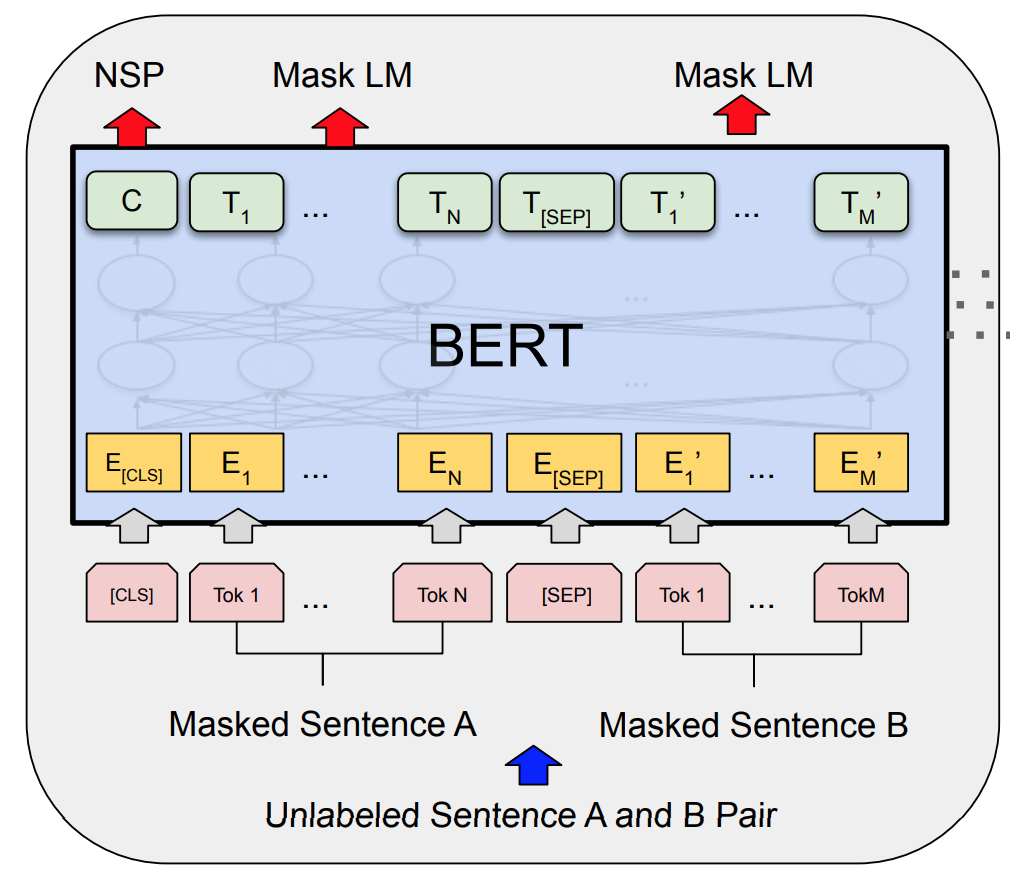
A Google-developed pre-trained transformer model for different NLP tasks such as text categorization, question answering, and more
GPT (Generative Pre-trained Transformer):

A class of models, notably GPT-3, that are meant to generate human-like writing
Computer Vision Software:
OpenCV

It is a free and open-source computer vision library that includes tools for image and video analysis, object identification, facial recognition, and other tasks.
YOLO (You Only Look Once)

It is a real-time object identification system that can rapidly and effectively identify objects in photos and movies.
Image AI i
It is a Python package that makes picture identification jobs easier by offering pre-trained models for different object detection tasks.
Frameworks for Machine Learning:
TensorFlow is a Google open-source machine learning framework that is extensively used for developing and training various sorts of machine learning models.
PyTorch is another well-known open-source machine learning framework, notable for its dynamic computation graph and ease of use.
Tools for Data Analysis and Visualization
Pandas is a Python toolkit for data manipulation and analysis that is frequently used for data cleansing and transformation.
Matplotlib is a Python charting toolkit that allows you to create static, animated, and interactive displays.
Tableau is a robust data visualization application that enables users to build interactive and shared dashboards.
Auto-sklearn: A scikit-learn-based automated machine learning toolbox for optimizing model selection and hyperparameters
H2O.ai is a platform that includes AutoML as well as other machine learning and analytics technologies.
Platforms for Chatbots and Virtual Assistants:
Dialogflow is a Google Cloud platform for creating chatbots and conversational interfaces utilizing natural language processing and artificial intelligence.
Microsoft Bot Framework: A framework for developing and deploying chatbots across a variety of messaging systems
Rasa is an open-source platform for developing conversational AI applications that supports both NLP and dialogue management.
Platforms for Reinforcement Learning:
OpenAI Gym is a toolset for creating and testing reinforcement learning algorithms in a variety of situations.
Stable Baselines is a collection of high-quality reinforcement learning algorithm implementations built on top of OpenAI Gym.
These are only a few examples, and the area of artificial intelligence technologies is always expanding. You can investigate several technologies to improve your AI-related projects and activities based on your individual demands and goals.
Agile
strategies for retail supply chain Management
As a result of the effects of change and
globalization, companies are attempting to build and sustain their edge over
competitors in a multitude of sectors. This scenario illustrates their
effectiveness and efficiency in utilizing the resources available to them. The
notion that the supply chain encompasses the complete manufacturing,
distribution, and even recycling of a product, as well as the reality that
efficient supply chain management signals effective corporate performance, has
piqued interest in the supply chain. Companies must continually assess their
supply chain architecture since it must be flexible, rapid, and timely in order
to make the appropriate changes in the industrial environment. Agility
is a concept that is widely discussed in scholarly communities and in
management practices and guidelines of its interaction with the supply chain.
It was originally developed at the stage of selecting the right strategic plan
in line with the requirements of the moment. The necessity for an innovative
supply chain system is highlighted by the global expansion of activity areas,
the uncertain industrial environment, and consumer demands. In this context, an
agile supply chain provides organizations with the ability to adapt to
unforeseen occurrences both inside and outside the company. The agile supply
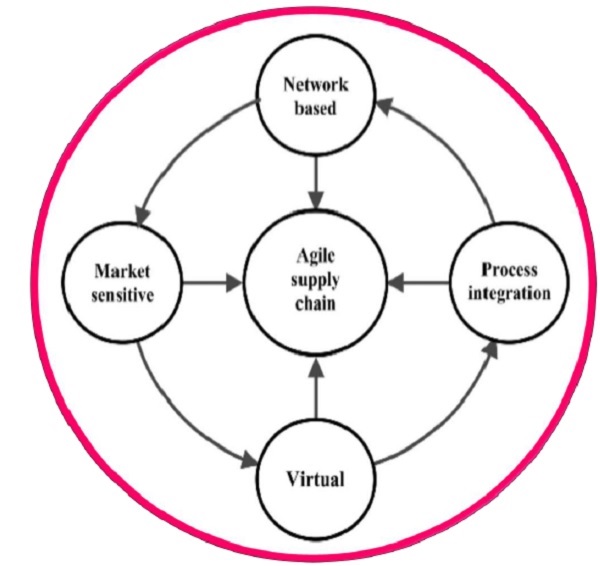
chain has now been analysed in terms of the requirements of an integrated
supply chain in managing uncertainty as well as its beneficial benefits for the
performance of the organization as a system in several roles. First, using
research on the agile supply chain, a conceptual framework was created, and the
aspects that build the foundation for the agile supply chain were presented.
Following that, the elements that influence the choice of an agile supply chain
within the context of product and market expectations were discussed. Within
the scope of the research and reports, the beneficial effects they have had on
business are summarized. Based on an assessment of the supply chains used by
businesses, it is determined that agile supply chain applications are critical
for long-term competitive advantage (Ruffle and Saradar, 2013).
supply
networks are growing more complex, and managing this complexity in order to
ensure effective responsiveness necessitates more sophisticated data
processing. In this respect, technological advancement (IT) is a tool that
helps to digitalize and/or create information systems procedures at the SC
level in order to gain a competitive edge via responsiveness. As a result, both
LSC and ASC may be supported by IT because they are strategies connected to
SC's response capabilities, delivering leanness or agility, respectively. As
such, major innovations in the IT solutions that can be applied to SC, as well
as changes in demand that necessitate very flexible responses, have attracted
the attention of business executives in the IT-flexibility relationship,
prompting researchers to examine the existing relationship between IT and
flexibility (Rahimi Nezhad Galan Kashi and Helmi, 2016).
The agile
supply chain prioritizes speed, response, cost effectiveness, flexibility, and
increased product and service production. Agile organizations provide greater
service standards with reduced inventory, so this sector has received a lot of
attention in the industrial and service industries during the last two decades.
This research report presents a
bibliometric survey of the literature on agile supply chains in the industrial
and service industries. It gathers information from a variety of publications,
companies, and regions to create a map of prior study on this topic. Using a
variety of approaches, the study shows how adaptable supply chain research has
evolved over the past few decades. Diverse visualization methods have been used
to examine highly significant authors, organizations, and keywords. Important
publications, citations, and a network of co-citations have been included in
the study. The main objective of this study is to present the efficiency of the
Agile strategies for retail supply chain management (Martin and Twill, 2000) .
1. Background
1.1 Key
issues and their conceptualization
In
developing brand reputation and establishing competitiveness in the global
market, supply chain management plays a significant role. Supply chain
management methods are one-of-a-kind and unrivalled. Effective supply chain
management methods usually boost organizations' revenue by reacting well to
consumers' requests as well as building rapport and dependability across
enterprises for improved customer delivery. Customers' demands are increasing
as the market expands from a domestic to a worldwide level, particularly in
terms of lower-cost items, faster delivery, improved quality, and the quantity
of product assortments. This necessitates backing for efficient supply chain
management, which may enhance value, efficiency, and customer satisfaction. As
a result, the marketability of items is determined. Industry leaders,
policymakers, educators, and researchers are all concerned and interested in
supply chain management in the present market conditions. This is because the
area encompasses a wide spectrum of operations, ranging from procurement and
manufacturing to consumer products, and it has become the primary instrument
used by businesses to gain a competitive advantage in the market. Due to its
essential position of "location" in the "demographic segmentation"
marketing mix idea, it is becoming a key aspect in surviving in today's
corporate situations. Supply chain management is the sole aspect of the market
that is particularly tough to mimic when compared to other notions. Supply
chain management necessitates a firm's connection with its suppliers being
extended (Moynihan and Dai, 2011).
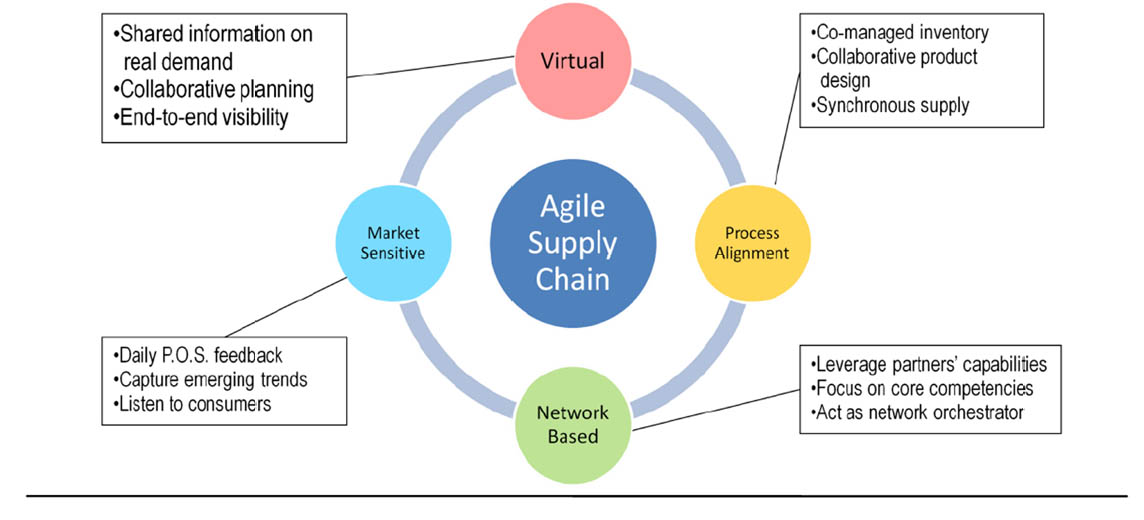
Fig2:
link between agile strategies and Competitiveness source: ResearchGate
Some
key issues related to supply chain management-
· Customer
expectation management is one of the most difficult aspects of supply chain
management. Service providers are supply chain managers. They also help with
indirect procurement, project and production demands, as well as requests
coming from external customers. As a result, supply chain managers must
implement effective procedures to ensure that commitments are met on time,
every time.
·
Along with managing consumer expectations,
suppliers must also be managed. To properly manage the supply chain, one must
have good connections with the suppliers. For resolving this issue real time
data on timely basis is highly required.
· Concerns
regarding the quality and sustainability of products manufactured in other
locations are amongst the issues of the international supply chain network.
This is especially true when product components must full-fill regulatory
requirements.
·
Access to your supply chain data is one of the
most crucial criteria in today's modern supply chain. Data access can assist in
a more effective supply chain. Without this, you won't be able to make informed
changes to your supply chain or reduce risks.
·
Risk mitigation is difficult for any supply
chain management organization. Whereas risk is a broad concept, supply chain
managers should be aware of a few key supply chain concerns (Martin and Twill,
2000).
1.2 Supply chain modules with strategies
|
S.no |
Module |
Strategy |
|
1 |
Production Management |
Production
management is the process of overseeing a company's actions in order to
provide the required products and services. Planning, executing, and
directing activities to turn raw resources into completed goods and services
are all part of it.
|
|
2 |
Inventory management |
The process of ordering,
storing, using, and selling a company's inventory is referred to as inventory
management. This involves the storage and processing of raw materials,
components, and completed goods, as well as the administration of raw
materials, modules, and final products. |
|
3 |
Location Management |
The process of determining
a person's physical location so that calls directed to that user can be
routed to that place is known as location management. Location management is
also in charge of ensuring that users accessing the network are genuine. |
|
4 |
Transportation Management |
As part of supply chain or
logistics management, transportation management encompasses the systems and
procedures used to manage the requirements and demands relating to the
physical movement of products and cargo. |
|
5 |
Information Management |
Throughout the information
life cycle, information management is a wide phrase that encompasses rules
and processes for centrally controlling and distributing information across
many persons, organizations, and/or information systems. Information asset
management is another term for information management. |
|
6 |
Requirement Management |
The goal of requirements
management is to make sure that product development objectives are
accomplished. It's a collection of procedures for documenting, evaluating,
prioritizing, and agreeing on requirements so that engineering teams have the
most up-to-date and authorized requirements at all times. |
|
7 |
Quality management |
The act of managing all
activities and duties required to achieve a specified degree of efficiency is
known as quality management. Quality management includes establishing a
quality strategy, developing and executing quality assurance and planning, as
well as quality control and quality improvement. |
|
8 |
Customer management |
Customer management is
referred to as the process of managing an organization's, people's, and
customers' relationships across time. |
|
9 |
Stock Management |
The technique of ordering,
storing, managing, and regulating goods is known as stock management. From
raw materials to completed items, stock management relates to everything a
company employs to make its products or services. |
|
10 |
vendor |
Vendor management is the
process that enables a company to take necessary steps to control costs,
reduce possible vendor risks, ensure outstanding service delivery, and get
long-term value from suppliers. |
(Rahimi
Nezhad Galan Kashi and Helmi, 2016)
2.3 Application of agile strategies for retail
supply chain management
Adaptability is a priority in agile supply chain management. It's for businesses that need to respond rapidly to shifting circumstances. This strategy made it easier to adapt sourcing, logistics, and sales in response to economic fluctuations, technological advancements, and client demands. Before ending manufacturing, an agile supply chain usually waits to see what the market demand is. Corporations may use short-term estimates to help them stay flexible, but one of the most important aspects of agile supply chains is that they adjust to demand as it occurs. This method is ideal for generating goods that are constantly changing and adaptable, like clothing. The agile supply chain emphasizes adaptability and responsiveness. It adjusts to changes in the marketplace, client preferences, and business quickly. It's designed to deal with market volatility by "postponing" manufacturing and waiting to see what the market says before proceeding. An agile supply chain waits to see how much demand there is before generating the final product, allowing it to react immediately to demand rather than predict it. Some market forecasting is still required as several parts of a product are generated ahead of time to make the finalization process swift and efficient (Hamdani et al., 2022).

-
Micro -Learning an important E-learning trend Micro learning is quickly becoming a popular trend in the world of e-learning. This metho...
-
 Hi Every one, This is my first post , i am a Technical as well as a Subject Matter Expert in computer science.

